Schrödinger’s Solitaire

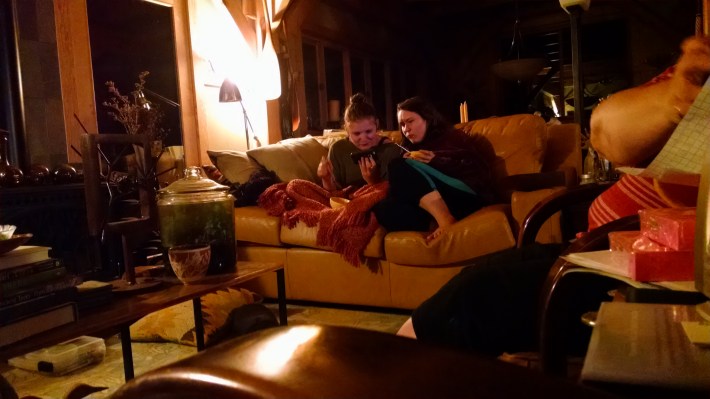
I adore games. I like crossword puzzles, word finds, and sudoku. I like games you play in pairs and groups like Clue, Monopoly, and a cool card game that my daughter’s girlfriend introduced us to this winter called Schrödinger’s Cats. You know, Schrödinger, the guy with the cat in a box that was either dead or alive because until you looked you didn’t know…. That guy.

But, having grown up before the advent of both cool new games and the Internet, my go-to games, even online, are card games. I enjoy playing solitaire on my smart phone. I know the game was only put there on computers to test the functionality, not thinking people would *actually* play it – or so I’ve read.

I play solitaire. And, I’ve learned something about myself recently. I like to win, but the pressure of knowing that I’m supposed to win makes something a lot less fun.

You see, in my version of solitaire, I can choose from a game that is drawn “randomly” or a game that is deemed to be a “winning” game. Feeling that I have pretty mad solitaire skills, I always play random, until today. I accidentally tapped the button for a winning draw. That’s where the fun stopped.

During the few minutes it took to play the game, I felt stressed out. I was supposed to be able to win with this draw. If I didn’t win this one, it was *my* fault, not just bad luck or an unwinnable game. The way I understand it, most solitaire games are winnable, but a small choice during the early part of the game can render it a complete loss when you get to the end. I always felt justified when I didn’t win a random hand.

I did win the winning hand. But I felt so pressured during the game that it wasn’t fun.

In other parts of my days, when I’m not playing games, I’m an educational psychologist and I study motivation. This shift between winning game and random game should have been no surprise to me. It’s the same as in studies when someone starts to get paid for something they were just doing for fun: their intrinsic motivation evaporates and it becomes just a chore. This felt like a chore. It was a winning game and I was supposed to win. It’s also referred to as introjected motivation when we experience the “should” emotion, as in I should do something. This honestly translates to I should do the thing, and if I don’t, I’ll feel bad. I would have felt bad if I didn’t win the solitaire game.

Little game, big mood.

I don’t mind losing, but when I was supposed to win, I didn’t even want to play.

I will play again. I’ll play solitaire, and the fake Yahtzee game on my phone. I’ll play card games, and wii mystery games. I’ll even look up the card game that we played over Christmas. I will play these games on “random” mode, though because like Schrödinger, I don’t want to know if I’m going to win or lose, until I open the box and play the game.
 

Is my sweater undermining the revolution?

Is my sweater undermining the revolution?

Scarves

I’ve lost 50 pounds and kept it off for two years.  Prior to this amazing feat, I knew where I could buy my work wardrobe:  Lane Bryant. I shopped there and I loved it.  I was on the smaller end of the size range so anything I wanted to try on would fit, and my wardrobe choices were based on whether I liked the pants, the dress, or the whole outfit – not what was left in my size.  Sure, there were plus size departments in other stores, but I found that the choices at Lane Bryant were superior since they catered to women size 14 and up, rather than making bigger versions of crop tops that looked good on a size 4 model.

Having achieved my new size and healthy life however, I’ve stepped into another question:  what *do* I wear to work?

Currently, my wardrobe is a carefully curated collection of items from Talbots, Talbots Outlet, JC Penney, and Goodwill – where I actively search for Talbots, Eileen Fisher, and even the Worthington label from Penney’s.  I also like Lands’ End, the Gap, and Old Navy Rockstar skinny jeans.  When I find them at Goodwill, I’ll even pick up clothes from Ann Taylor.

I’m in an industry – academia – which does allow significant leeway in how one dresses, but I’m a project manager and I take the “manager” part seriously.  I try to dress well most days of the week.  And, for me, “dress well” means a few types of outfits.

  • Nice dress pants, a sweater, and a scarf or a necklace
  • A tailored skirt and a blouse
  • Either pants or a skirt with a blazer and what my mom would have called a shell – a t-shirt that’s not really made of t-shirt material
  • A dress
  • And, worth mentioning – I nearly NEVER wear high heels. I fall and trip over my shadow so anything that makes that easier is generally to be avoided.

All of this build up is to say that when I read the Atlantic article,linked at the end of this post, about how today’s Washington DC fashion is bowing to the patriarchy and is schizophrenic in its acceptance/rejection of women’s sexuality, I was bewildered and annoyed.

I do not live or work in Washington DC, but in West Lafayette, Indiana.  And, I would venture to guess that the author would lump in my favorite clothes brands in with her disdain for Ann Taylor styles.

WHAT AM I SUPPOSED TO WEAR?

Are these criticisms only relevant in the nation’s capital?  Are they part of a world-wide conspiracy?  Are my clothes presenting me as a servant of the patriarchy?  Is my wrap dress exposing my sexuality in ways that go beyond a tiny bit of cleavage that I’m working to hide with a safety pin?  Am I underselling my status as a professional with a matching cardigan/shell twinset?

For a while, I envied a male colleague that wore suits every day.  I got brazen enough to announce this to him, and he said that he only did it because they matched and he didn’t have to think about what to wear.  Since then, I’ve looked at suits as an option, but to be honest, even after a 50-pound weight loss, I still don’t look great in blazers.  Larger-breasted will understand what I’m saying.

But, really, if Ann Taylor is “corporate office submissive” what is Talbots?  Corner-office-capitalist patriarchal?  Wouldn’t dressing in matching suits each day with a variety of pastel button-downs be just as patriarchal?  Trying to dress just like a man was a big hit in the 1980s.  The author even mocks the ballet flats of recent decades as a quiet way for women to slip out of the room while the big, bad men talked over the brandy and cigars.  Silly me, I thought flats were a way not to fall on your face during a big presentation at work.

I have seen fashion trends which were clearly designed to infantalize women.  Plaid skirts and knee socks on adults is a look that concerns me a bit.  Like the author mentions, oversized Peter Pan collars are also a bit of a stretch.

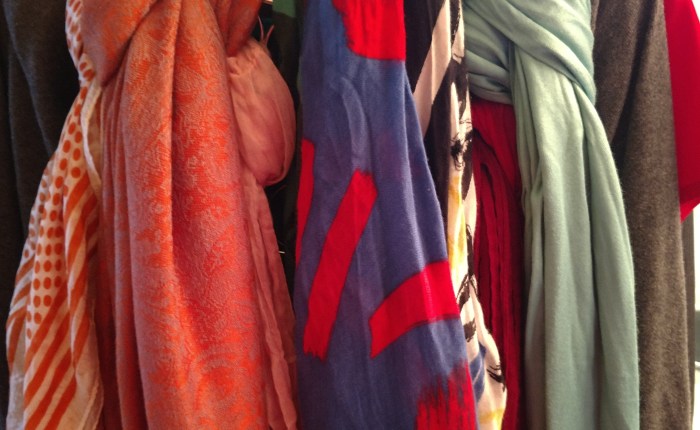
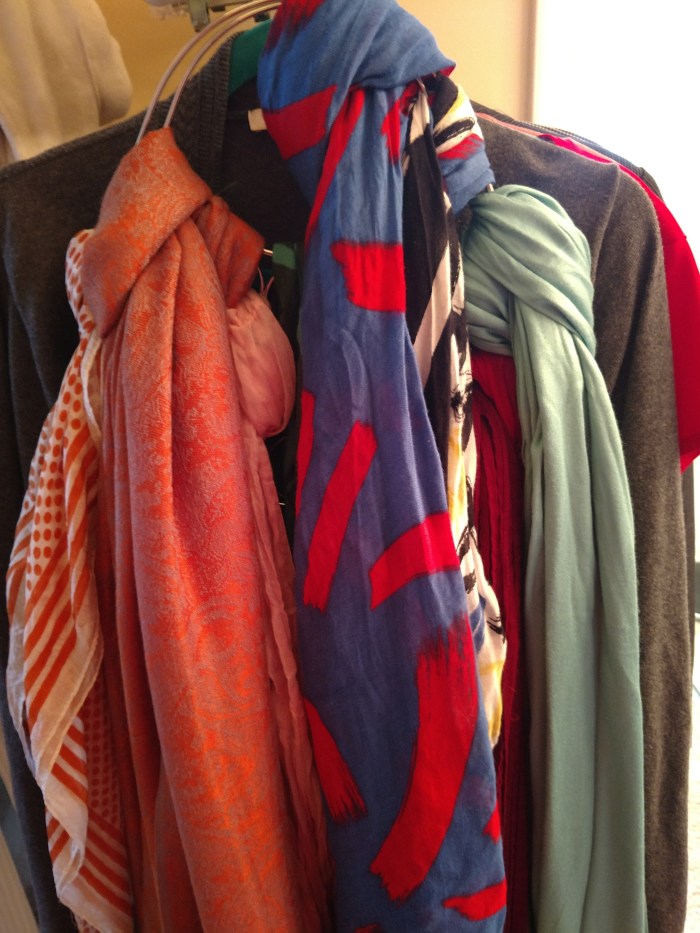
Me and my black Talbots dress pants, however, will be just fine at work this week, thank you.  I don’t see where my new sweater and scarf are selling out the revolution.

https://www.theatlantic.com/politics/archive/2015/09/fear-and-clothing/405919/


Star Trek – I Want to Go to There!

I’m a Trekkie.

Yep, it’s true. I’m sure this is actually not a surprise. Many nerds like me are Trekkies.

When a colleague asked what a split infinitive was I ran out of my office cubicle and exclaimed, “To boldly go where no one has gone before!!!” I then had to actually explain the grammar concept, but the opening lines from Star Trek are the most famous split infinitive. (It means that there is an adverb between the infinitive form of the verb, “to go.”)

That’s not the only thing I love, though.

My husband Steve and I have been re-watching the “new-ish” Star Trek series which are all available on Netflix. We got absorbed in Deep Space 9 first this time, and then we moved on to Voyager. We are now just about done re-watching all of The Next Generation.

I look forward each night to the next episode because Star Trek represents the best of our society – as best as we knew it at the time that the show was written and filmed.

(I have not been able to watch the most recent series because I refuse to pay for yet another streaming service. Also, not a big fan of the movies. But, I don’t like movies anyway.)

The original series is not one that I’ll go back and binge watch, admittedly. But, they had Uhura, an African-American woman on TV in the 1960s. She had a technical job and even an on screen kiss with Sulu, an Asian-American crew member. And, they had Spock, the calm, truthful Vulcan who showed us that logic was enlightening.

But, my favorites, The Next Generation (TNG), Deep Space 9 (DS9), and Voyager really dig in and show us what’s good about us.

TNG has a Klingon crew member. In the original series, the Klingon were sworn enemies of the Federation. But, by the time we got to TNG, we were at peace with them. There is also a significant amount of diversity among the crew members, not as much as the later series would have, but it certainly shows us that we, too, can get better and embrace diversity.

On episodes of TNG, they also work to save life forms even if they don’t understand them. They take risks to care for beings that they don’t always understand, including those beings that potentially could do harm to the crew and the ship.

DS9 increased the level of diversity, with more and more crew members who weren’t humans, along with appearances nearly each week from new species. Ferengis were seen as enemies in TNG, but by the time we got to DS9, they, too were more accepted. In fact, spoiler alert, by the end of DS9 a Ferengi was admitted to Starfleet Academy.

Voyager gave us our first female captain. Yes, even in the future it took this long. It’s worth remembering, though, that even when we portray the future, we are really holding up a mirror to ourselves. Star Trek gives us our best selves.

I want to go to a place where diversity is prized, where alien races and beings are valued, and where our best selves are held up and honored.

Tonight, we’re watching an episode of TNG from season 7. I’ll be there.

Moral Victory: $7.99 at Walgreen’s

nice nails
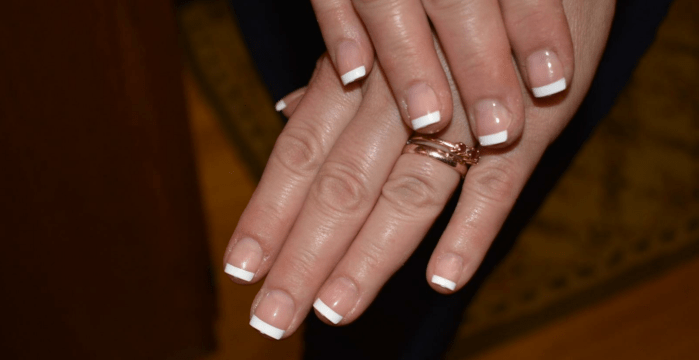
My nice nails. My cheap moral victory.

My mom always had the nicest nails.  They were natural, strong, long and admired by people wherever we went.  They weren’t freakishly long and she didn’t paint them funky colors, but other women would comment at the grocery store, at the restaurant, all kinds of places.  “Oh, your nails are so beautiful!”

I hated her nails.

There were funny stories, like the time she jumped from the deck of our above ground pool onto a raft in the water.  As she tried to grab onto the raft with her hands to make sure not to slide off, she impaled the thin plastic with her thumbnails.  The air whooshed out with some serious force as the raft began to sink.  That was the last cheap raft we had at our house.

There were dark stories.  I may or may not have been an impulsive child.  At the very least, I was a child.  Once, in an angry attempt to stop me from doing something more than likely stupid, she grabbed my upper arm.  She left marks.  Four little curved scars on the inside of my upper arm.  She was probably just as horrified as I was, but it was a lesson for me that the nails were a force to be reckoned with.  There were many discussions about how I wasn’t to tell people what had happened because she didn’t want to get reported for child abuse.  It was the 1970s, so I don’t know what she was worried about, but this was not something to brag about to playground peers.

The hardest part to stomach for me about my mom’s nails though wasn’t the set of scars that I had for months.  It was the comparisons.  I had – and still have – nails that are about as thick as waxed paper.  Hers were like corrugated cardboard.  Mine would peel, split, break.  I bit my nails.  I picked at the skin.  I was an anxious child.  I was always told that if I cared, my nails would look as good as hers.  She reminded me – constantly – not to bite my nails.  From my own mom, as well as my Auntie Pat, a family friend with auntie status, I would receive manicure kits at Christmas and birthdays.  As if the only thing that was stopping me from having beautiful nails was a new cheap-ass metal thing to push my cuticles back with, from a zippered leatherette case, where all the tools were held in with little elastic straps.

Not being able to stop biting my nails and not being able to cultivate the Revlon hand-model worthy nails that sprang naturally from my mother’s fingers, I felt like a failure.  I tried what she swore worked for her: take off the polish and apply new polish every day.  No luck.  No improvement.

(Truthfully, every article I’ve read on how to get amazing nails says you should limit the amount of acetone you expose them to, but that mattered not to my mother.)

Once, as a young adult, she paid for me to get my nails done.  It was some technique where they build up a fake coating on your nails and then extend them beyond your existing length.  I tried to appreciate the gesture, but when I went home and tried to play my guitar, I realized how incompatible these nails were with my life at the time.  I was able to cut them short enough for the guitar, but sort of defeating my mom’s purpose when she saw me next with mismatched hands of nails:  right hand long, left hand short.

I turned 50 this year.  My mom has been gone for 9 years now.  Her nails were perfect until the end, even if her mind had left her far behind.

My own daughter, Annie, also struggles with thin-and-flimsy-nail syndrome.  And anxiety.  While I remind her not to put her fingers in her mouth, it’s mostly to stop the spread of germs.

Annie has solved the problem of thin nails by buying fake nails from the drugstore and gluing them to her own.  This is a thing. A thing I never really wanted to try.  I would suppose that not wanting to have nice nails was my own way of fighting back against the years of commentary like, “your hands/outfit/diploma/life would look so nice with pretty nails.”

Casting aside that black cloud, I bought a set of nails a few weeks ago.  They were $7.99.  French-tip manicure style, and the size is “RS” for really short.  I had to warm up to the idea of using Super Glue to affix a set of claws to my fingers.  I put them on for the first time in the passenger seat of my husband’s car as we drove out to see Liza, our oldest daughter, in Cleveland.  I cracked the window for proper ventilation.  Trying to use up a little extra time on the way to picking her up after opera rehearsal, we stopped at a drugstore so I could get more glue.

I was putting the nails on in the car because I had time to do it.  I don’t think Liza cares about nails, one way or another.

With all 10 nails firmly affixed, I realized I had finally achieved that holiest-of-states:  I had nice nails.  For $7.99 I achieved a moral victory.  I was no longer just Jenny-who-can’t-have-nice-nails.  I’m not a failure.

I’m on my second box now.  I like them.  I have toyed with the idea of having a real nail salon apply what my younger daughter calls acrylics to my own nails, but for now, I’m enchanted with the idea of being able to buy a long-sought after moral victory for less than eight dollars.

No More Expert Advice

No More Expert Advice

N.B. I wrote this post a while ago.  Psychologists say that we often do not have ANY idea of what we will think is a good idea in the future.  Future People are often disappointed by the choices made by Past People – whether it’s choosing the vanilla ice cream instead of the birthday cake flavor or – oh my! – that prom dress! 

But in this case, I was quite impressed with Past Person.  In fact, I have been trying to remember this advice since I re-read this essay. 

The picture is of some scaffolding.  The point here is that as we learn, other people “scaffold” for us, help us reach where we can’t get on our own.  It seems that I need to remove the scaffolding now.  Read on.

In a way, I’m saddened to write this post.  I take a keen interest in hunting down experts in a given field and asking them about their knowledge, adding their expertise to my own, ever-growing knowledge garden.  However, lately I’ve been finding myself disappointed by the experts.  I go places where they congregate, and they are ordinary people with no double-super-secret wisdom.  They have no decoder rings or capes.  And, most disappointing of all, they don’t know much that I don’t already know.

I want to have people I can look up to as the experts.  Someone there to guide me when times get tough and the going gets impossible.  These people are harder and harder to find.

Conclusion number one:  I have become the expert.

Conclusion number two:  it’s time to start taking my own advice and do the things I think of in my head.

Instead of looking for expert testimony to solve my worries, I need to recognize that in many cases, I am the expert I’m looking for.  Worried about my kids – well, there’s a PhD for that.  Or a medical doctor if necessary.  Worried about my relationships – I *am* a psychologist, no matter how often I try to deflect and defer that I’m not *that* type of psychologist.  Taking care of myself – I know what I need to be doing and I should just knuckle down and do it.  I flossed for two nights in a row.

Other bigger things I have already off-loaded, like financial planning, car repairs and squirrel capturing.  Thanks to Steve on the last count.

Recently, I began to recognize that this lack-of-expert status applied to my work world, too.  I look to the experts to tell me what I should be doing, or could be improving upon.  But, I see that the experts are just people that know as much as I do, sometimes less, and sometimes only a slight bit more.

And, like in my life, I need to see that I know what to do and how to do it.  Now, instead of using up energy seeking out experts, I will do it. Rather than work on seeking out validation or advice from someone else, I will step up to the plate and be my own expert.

Stop Tech Shaming Our Kids

Annie and Liza at Karmas
Annie and Liza, eating ice cream and sharing a moment on Annie’s phone. Together.

I have this picture of my daughters. You can see it here, even if it’s a little blurry. They don’t get to spend a lot of time together because since Liza was 14, she’s been in boarding school and now she’s just finished her freshman year of college. Annie has grown up with her sister as a summer event.
I love this picture because they are spending some quality time together. They are laughing and enjoying each other’s company. They are bonding.
They also happen to be looking at one of their phones.
Another time, we were at a Kentucky Derby party and they were huddled together, looking at someone’s phone, deciding where to place their one dollar bets. With their hats on and their beautiful dresses, they looked perfectly regal. I was enchanted. And, I’d left my phone in my purse, so I couldn’t take a picture. Which was okay.
Annie, who is 13, spent over an hour – maybe more – skipping rocks in our friend’s lake. She was picking up and throwing so many that our friend, Karma, thought Annie might provide the sandy bottom to her share of the lake that she’d always desired.
Liza, 19, was hanging with her sister, sometimes in and sometimes out of the water. She caught Annie once when Annie almost fell in. And, she spent most of the hour or so rating Annie’s rock-skipping skill level, much like a sports commentator.
I was loving each and every moment of this rock skipping and commentary. The scores were ridiculous. A single skip was usually a 6 or more. Some poor attempts were negative 1. When Annie tried to skip a rock the size of her head, I think Liza scored it as a -56.
I did take lots of pictures and videos of this afternoon at the lake. I even shared them with Steve, their dad/my husband. He was working in another state while we vacationed.
I’m writing this to present a balanced approach to kids with phones and technology.
I’m writing to come out against tech shaming.
I’m a Gen Xer. Unabashededly. I was born in 1967 and on a good day, I might tell you I remember the moon landing. I grew up in the shadow of rampant technology. I had a personal computer when I was 13. A Commodore 64. When my dad realized the shortcomings of the original system, we got a cassette tape drive so we could save things.
My kids are the kids of Gen Xers. Liza could drag and drop before she was 2. We held off a little more on the computer for Annie, but they are both digital natives.
With this as a background, however, I have come across some serious tech shaming directed at kids by folks from the Baby Boomer generation. They really remember the moon landing.
Tech shaming usually sounds like this: “I’m glad my generation got to drink from the hose instead of being on their phones!” “Share this if you played outside everyday instead of on the computer.” Or, my favorite, which I heard directed at a bunch of kids aged 3 to 10, mostly under 7, “Go outside and play instead of staying inside. You are missing so much.”
As an aside, we now know that drinking from the hose is a little dangerous. My generation drank from the hose, too, but we don’t let our kids do it, because, science.
But, honestly, most kids have a balanced life. In families where kids can afford technology, what makes you think that the parents are such knuckleheads that we don’t make sure our kids get outside and get dirty once in a while, too?
Truly, this starts to sound like parent shaming. “Hey, Gen Xers and Millenials, you don’t know how to raise your kids, so we’re here to tell you to make sure you let them out once in a while!”
Doesn’t every generation have something they do that pisses off the previous generation – especially regarding parenting?
We co-slept with our kids. Yep. In our bed. Until they were about 12 months. That worried people. In some cases it can be dangerous, but we made sure never to drink heavily and had a very firm, non-pillow-top mattress to prevent suffocation. See, my generation can be good parents.
Instead of tech-shaming kids and their parents, provide some cool activities for younger kids to do. Rather than publically shame kids for the opportunities that their parents are providing, try instead to suggest building fairy houses, gardening, or water fights with the hose on hot days. I’m sure you’ll get lots of takers from kids out there.
Just remind them to leave their phones and tablets inside.
And, don’t let them drink from the hose.

A Brand New Continent

Bogota night one
The view from my hotel the night I first arrived in Bogota. 

Hi. I’m one hour from a new continent:  South America.  It’s an exhilarating feeling.  I’m a little nervous because I can speak Spanish but not understand it so fast.

It’s a long flight but I didn’t feel like sleeping.  I even had my third glass of wine today and I didn’t feel tired.

The map on the screen on the chair in front of me says we’re over land now.  Oh boy!  I’m in Colombian air space!  1 hour and 1 minute now.

And, exactly one hour now.  It will be about 9 when I arrive.

I’ve been watching TV shows, and I wrote a blog post. I tried to listen to the Hamilton cast album, a hip choice for Delta, but it was too distracting.

I’m chugging a diet coke like it’s going to save me.  What from?  Going into the unknown?

I want to buy something meaningful to bring back home.  I’ve heard coffee and chocolate.  I don’t think shoes are a good idea for me.  A leather bag would be awesome.  Maybe jewelry?

Is visiting a new continent worth a celebratory item?  I’m so proud of how hard I’ve worked to get to this point.  It would be wonderful to have something to remember this trip, the hard work, what it took to have a job where I get to go to Colombia to train professors.

46 minutes.  I realized that somewhere a while back, I flew over Cuba.

The flight info shows other cities in the view.  Quito.  Cali.  Maracaibo and Caracas.

I’ve been to Canada so often, I’ve lost count.  I went to Mexico once with my mom.  I’ve even been to Europe twice.

But, this is a whole new continent.

They handed out headphones on this flight.  This time I took them.  I can even charge my phone on the plane.

No contact with home, though.  I didn’t buy internet access on the plane because it was only good for USA airspace.  I didn’t think Annie’s softball games would be over by the time we ran out of Florida.

I can more or less understand the announcements in Spanish and I can testify now that English is much slower.  I believe that I’ll be asking for people to repeat “mas lentamente, por favor.” I also just realized that my texting app speaks Spanish.  ¡Hola!

33 minutes.

Habia un gran tiempo  hasta que ha visitado un pais que habla español.

I think I’m learning the limitations of my texting app’s Spanish vocabulary.

29 minutes.

In order to get the map range wide enough so I can see where I am from, I have to zoom out enough to also see Lagos, Nigeria and Istanbul, Turkey. I think I’m pretty far from home.

The destination time just jumped to 12 minutes.

9 minutes now.

The flights have been roomy.  I had no seat mates from Indy to Atlanta.  On the way here, i had an aisle seat.

6 minutes.

Can I ask them to be sure to stamp my passport?

A whole new continent.

5 minutes.

What do I bring everyone at home?

We’re descending.

4 min.

I can see the lights of the city.

2 minutes!

Dos minutos.

1 minute.

The lights are closer now.

0 min and touchdown.

Bienvenidos.

Welcome to Bogotá!

How did we do 22?

The Empress
The hotel in Victoria, BC, where I’m not with my husband on our anniversary. 

According to this computer, it’s already after midnight, making it my 22nd wedding anniversary.  My husband and I frequently miss each other on this holiday, which also means we miss each other on his birthday, which is June 5th.  Right now, I’m in Victoria, British Columbia, Canada.  Usually, Steve is away for his work, so my being gone is the only odd thing about this anniversary.

Twenty-two years is quite a long time.  A child this age would be able to drive, vote, drink, and be – hopefully – done with college and looking for a job.  In theory, my marriage should be able to support itself now, even if it still thought ramen noodles were dinner food.

I’ve had a number of good friends go through some rough divorces lately.  I was even part of a women’s group where everyone in the group, besides me, was either contemplating divorce, going through one, or was recovered from one.  After a while, I said something to the group about how awkward I felt sharing my personal details because I had a happy marriage.  I did not expect their response:  the other women all asked me to keep talking about what was going on at my house because it gave them hope that, yes in fact, some people do get happily married.

When people ask how we’ve managed to stay married so happily for so long, my instinctual response is to say, “I don’t know.”  But, I suspect I do know.  We both know.

To celebrate this anniversary, I have a list of ways that we’ve managed to stay happily married. As I’ve already mentioned, I’m not at home and it’s already 1 a.m. back home, so the following list is incomplete.  I should have a list of ways that Steve thinks we’ve managed 22 years, but that will have to wait.  Letting him sleep is a way that we’ve stayed married.

  1. Very minimal criticism. I can probably count on one hand the number of times in 22 years he’s told me he didn’t like an outfit I was wearing.  We’ve both become good cooks by having the other one praise our most hideous efforts.  Not only does this mean we’re just really nice to each other, it also means that when we have a criticism, we are listened to.  Since any criticism is rare, when I share an unpopular opinion about a parenting decision he’s made, or his choice of a shirt, he takes me seriously.
  2. Coping with adversity. This sounds ridiculous at the outset.  No one is going to advise couples to enact a traumatic event so they can grow closer together.  But, honestly, these events are going to happen if you’re together long enough.  We’ve gone through job loss, breast cancer, open-heart surgery, moving, moving again, and moving again.  It’s not just the trauma, but how you handle it.  We’ve done okay by listening to each other and – see #1 above – not criticizing each other much.
  3. Finding common interests. When we hit a rocky patch a while ago in our marriage, we realized that between jobs, my graduate school, and raising kids we’d lost any common interests we used to share.  So, we set out to find some.  We both like to create art, but we learned that is a crappy joint activity because I like to be inspired and free when I make art, but Steve is organized and tidy.  The friction wasn’t worth it.  We moved on and kept trying.  We found that we both enjoyed mystery video games with puzzles to solve.  Many late nights were spent trying to find just one more clue or uncover one more hidden object.  Good times.  Now, we’re really enjoying re-watching the modern Star Trek television series.  It’s a shared interest and it gives us something to talk besides the house, the kids, and our jobs.
  4. Respecting each other’s tempo. I’m a go-go-go person.  Steve’s not.  I make snap decisions, which I sometimes regret while he deliberates and has been known to take a long time thinking about what to say.  At this point, he just lets me go fast and I let him go slow.  It balances out quite nicely.  If I rush him, he shuts down.  If he tries to calm me down, I get antsy.  We’ve learned to adjust rather than try to change each other.

I wish I knew what Steve’s list would say.  But, like I said earlier, letting him sleep when he wants to is another key way that we’ve stayed happily married.

Happy Anniversary, Steve.

Please add your comments below about how you’ve managed to stay in a relationship for a long time or how you think you’d do it.

Thanks for reading!

I Look Up

I Look Up:  which is the first post on this new blog, being subtitled, “Why I have an Otter Box.”

So, since November of 2015 (a mere 6 months ago) I have broken two phones.  For the third phone, my family insisted that I get an Otter Box case.

(If you haven’t seen one, they are heavy-duty cases with tough, shock-absorbing padding.)

In some ways, I hate it.  It’s clunky.  It makes my phone less able to fit in my pocket.  It’s a constant reminder that I can’t hang on to an important and expensive possession.

Our 12 year old, on whose phone we have insurance, has NEVER broken her phone.  She is quick to remind me of this fact.

I dropped it today at a convention, right onto a terrazzo floor.  The gentleman walking ahead of me turned, and I shrugged.  “That’s why I have an Otter Box,” I told him.

I drop phones.  At least since November.

I used to be famous for spilling drinks.  A bloody Mary went crashing through my fingers on a date in college.  Not long after I spilled three or four glasses of water on a different date.

I had (have had – okay, still have) bruises on my shins way longer than most tomboys.  I run into things and trip a lot.  Often, I trip and fall in a spectacular fashion.  At a conference in Dallas where a colleague and I were strolling to find a place for dinner, I tripped and truly just threw myself at the sidewalk.  I flew face down, crash-landing on my knee.  She and I decided to eat at the restaurant I fell in front of.  TGIFriday’s will give you a bag of ice for your swelling, in case you ever need to know.

I’m not allowed to wear high heels anymore.  Frankly, I can fall off of flats.

None of these things alarm me.  But, they do irritate me.  Who wants to have co-workers worry about you when you decide to take the stairs?  Or even have your kids monitor the location of your phone – even after it’s been installed in the Box?

I’m not alarmed because I know why these things happen.

I look up.

I will lie on the driveway to look up at the stars.  At 1 a.m.  I love to stand under trees and look up.  The canopy of leaves and branches is like a cathedral to me.

In my day to day life, I also look up.  In fact, it might be said that I have my head in the clouds.  I study big ideas.  It’s my job.  I worked hard to earn my PhD, finishing at the age of 48.  I was not going to stop until I graduated.  At home, I’m the “big idea” person, suggesting that we paint the whole house, replace all the trim, or re-imagine the landscaping.  I have a very patient husband who is much better at seeing the clouds and the ground.

I look up – not down.  I put down my keys and then cannot find them again.  It’s been said, at home, that my tombstone will bear a lyric from Tom Waits:  I’ve lost my equilibrium, my car keys, and my pride.

The best phone story is the first time.  We were in Michigan for my husband’s grandmother’s funeral.  She’d just turned 100 a few weeks before, so it wasn’t a somber or mournful occasion.  My husband, one daughter, and I had decided to take in the antique shops in the small town before we geared up to drive back home that same day.  I’d been navigating our way out of the cemetery to the downtown area.  Once it was clear my husband was set with his directions, my GPS translations were no longer needed.  I put my phone down on my lap.  It got lost in the folds of the skirt of my black dress.  And there it stayed until we parked and exited the car.  Plop.  The phone landed face down on the asphalt.  It never occurred to me to look down and retrieve my phone before getting out of the car.

I look up.

Now I have an Otter Box.  Sometimes, I refer to it as “phone jail.”  My phone had to go to phone jail because I could remember to pick it up.

I can’t imagine any other life.  I see hummingbirds, shooting stars, and funny patterns in the clouds.  The airport in DC must have an interesting take-off pattern because every day I’ve been here, at least every sunny day – I’ve noticed a pattern of contrails that looks like a large hand in the sky, four fingers and a thumb, splayed out across the sky.

I wonder if Contrail Guy is looking up.  Does he drop his phone, too?

Jenny